
 By Robert Manser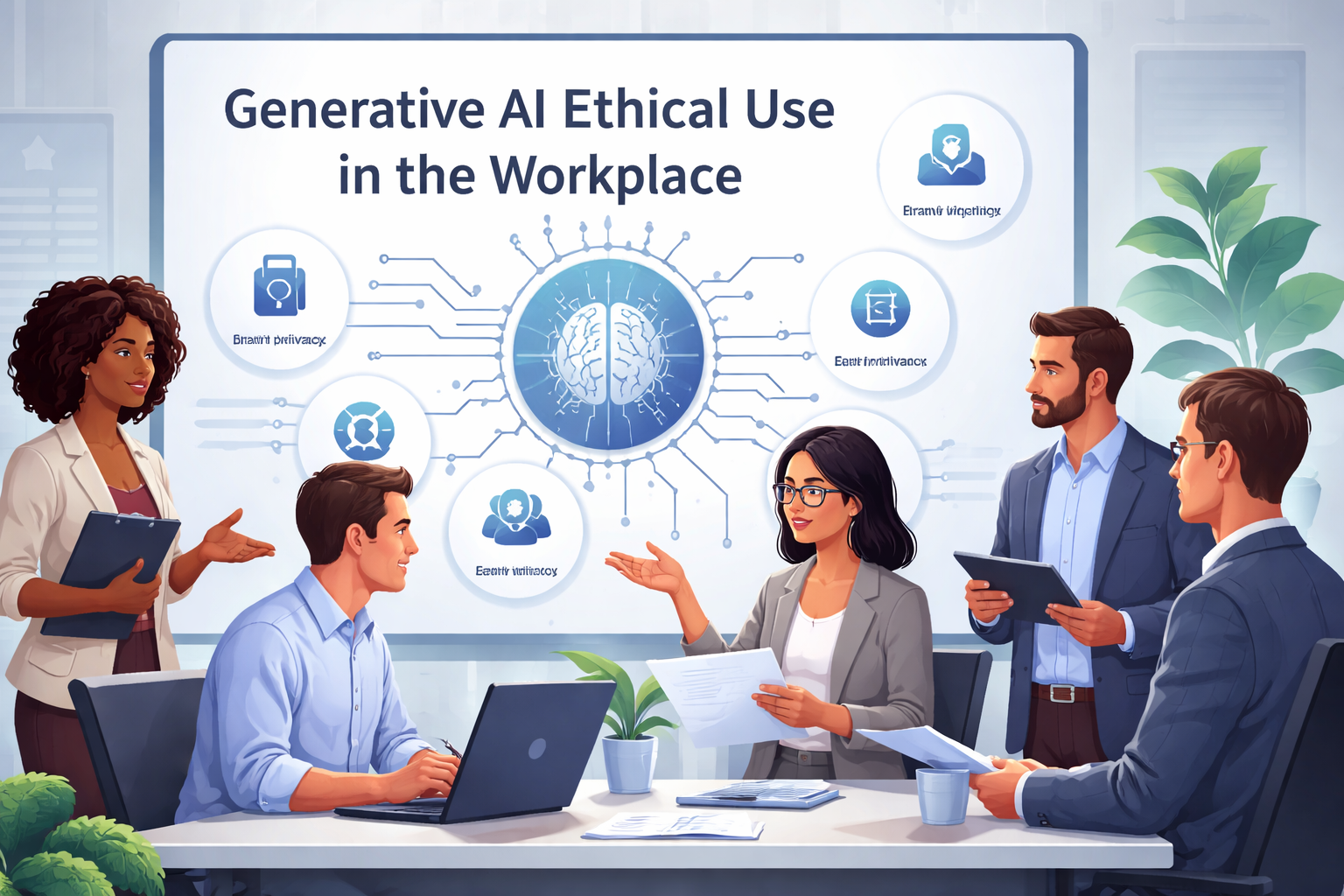
As generative AI continues to revolutionise industries, its integration into the workplace brings both opportunities and challenges. While AI can enhance productivity and streamline processes, it also raises ethical concerns that must be addressed.
Understanding Ethical Choices in AI Usage
Ethical decision-making in AI starts with recognising how our actions impact others. Ethical choices prioritise well-being (beneficence), avoid harm (non-maleficence), ensure fairness (justice), and respect autonomy. When using generative AI, employees must consider these principles to ensure responsible and transparent practices. Deep dive into this topic.
Respecting Copyright in AI-Generated Content
Copyright laws protect creators by ensuring fair compensation for their work. Generative AI tools often use copyrighted data for training, raising legal and ethical concerns. As an employee, avoid inputting copyrighted material into AI prompts without proper consent. Additionally, refrain from asking AI to generate content that mimics copyrighted works or styles. Have multiple team members review it for accuracy to avoid legal and ethical violations.
Protecting Privacy and Data Security
Privacy is a critical concern when using generative AI in the workplace. Sharing sensitive or personal data with AI tools can lead to privacy breaches. Employees should avoid inputting confidential information, such as client details or internal communications, into publicly accessible AI systems. Instead, organisations should implement secure, in-house AI solutions with robust guardrails to ensure data privacy and cybersecurity. When in doubt – DON’T! Obtain legal advice and check out this Government guide to privacy guidance to mitigate risks.
Navigating AI Etiquette in Workplace Interactions
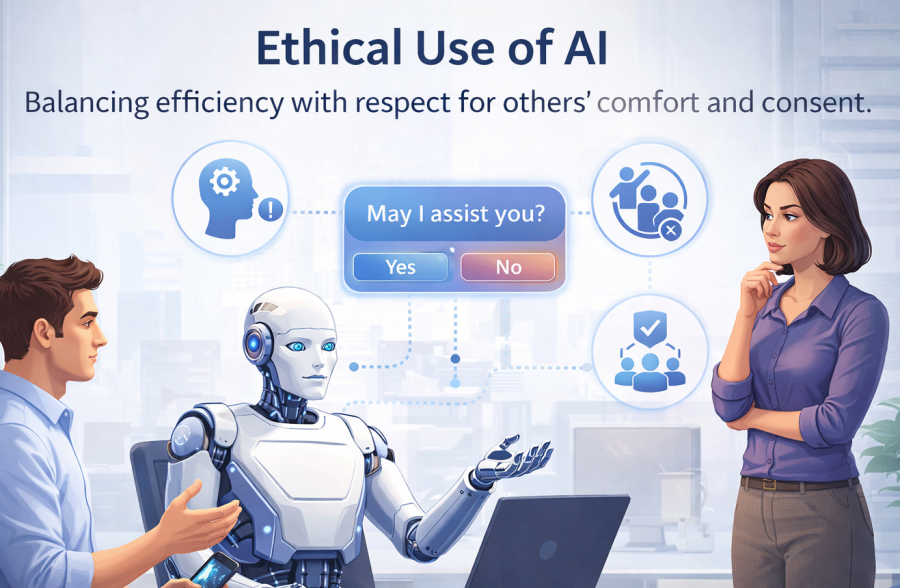
AI etiquette involves using AI tools in ways that respect human values and dignity. Transparency is crucial. Disclose when AI is being used in communications or interactions. For example, if AI is used to draft emails or generate meeting notes, inform recipients. Additionally, seek consent before recording conversations or using personal data in AI systems. Your colleagues won’t bite, and it’s a great way to start the AI ethics conversation with them.
More information: https://www.industry.gov.au/publications/australias-ai-ethics-principles
Addressing AI-Induced Workplace Challenges
Generative AI can shift workloads and create interpersonal conflicts. For instance, accountants have been dealing with changing technology for decades, but Australia’s peak organisation, the CPA, has taken a deep dive into trust and ethics, treating it as a human-only domain in which we must all use AI within these boundaries. Find out more here.

Advocating for Ethical AI Design
While end users cannot directly address the ethical flaws in AI design, they can raise their voices to demand better products. Employees and organisations like ACS can advocate for AI tools built with ethically acquired training data, fair compensation for data workers, and environmentally sustainable practices. By working collectively, we can push AI vendors to create tools that align with ethical principles.
What are your thoughts?
The ethical use of AI in the workplace is a complex but essential endeavour. By respecting copyright, protecting privacy, practising AI etiquette, addressing workplace challenges, and advocating for better design, employees and organisations can ensure responsible AI integration. What challenges, issues or solutions have you faced? Sound off in the comments below.